
How to Build a Bone Meal/Skeleton Farm in Minecraft
Learn how to build an efficient bone meal and skeleton farm using a spawner in Minecraft. Step-by-step guide without complex redstone.
How to Build a Bone Meal/Skeleton Farm in Minecraft
A bone meal farm based on a skeleton spawner provides a constant stream of bones, which can be crafted into bone meal to fertilize crops. Skeletons drop into a shaft, are finished off at the bottom with a single hit, and all the loot automatically flows into a chest. The entire structure is built without redstone, except for one piston, and works on any map where a skeleton spawner is found in the Minecraft world.
What You Will Need
Before starting, prepare your materials and make sure there is a skeleton spawner nearby.
16 Torches
16 Ladders
12 Glass Blocks
13 Slabs
2 Chests (for a Double Chest)
2 Hoppers
1 Minecart with Hopper
1 Piston
1 Lever
1 Cobblestone Wall
2 Water Buckets
1 Pointed Dripstone
A few Rails (temporarily, to place the minecart)
A supply of building blocks for walls and filling gaps
How It Works
An active spawner generates skeletons in a 9×3×9 area around itself under two conditions: the player is within a 16-block radius, and the block light level is 0. Water pushes the mobs to a central hole, where they fall onto a Pointed Dripstone. The stalagmite doubles the fall damage, so after falling ~11 blocks, the skeleton is left with minimal health. A single hit from you finishes it off — this grants experience and credits the kill to the player, which opens the chance for drops like a bow and armor. Dropped items fall through the wall into the minecart with a hopper and then into the chest.
Step 1. Spawner Room
Once you find the spawner, immediately place torches on all sides of it so mobs don't spawn while you're building. Clear the room of unnecessary blocks and expand it so that there are exactly 4 blocks from the spawner to each wall — this matches the horizontal spawn area. Fill any gaps to create a perfect square. After that, dig the floor under the spawner 3 blocks deep.
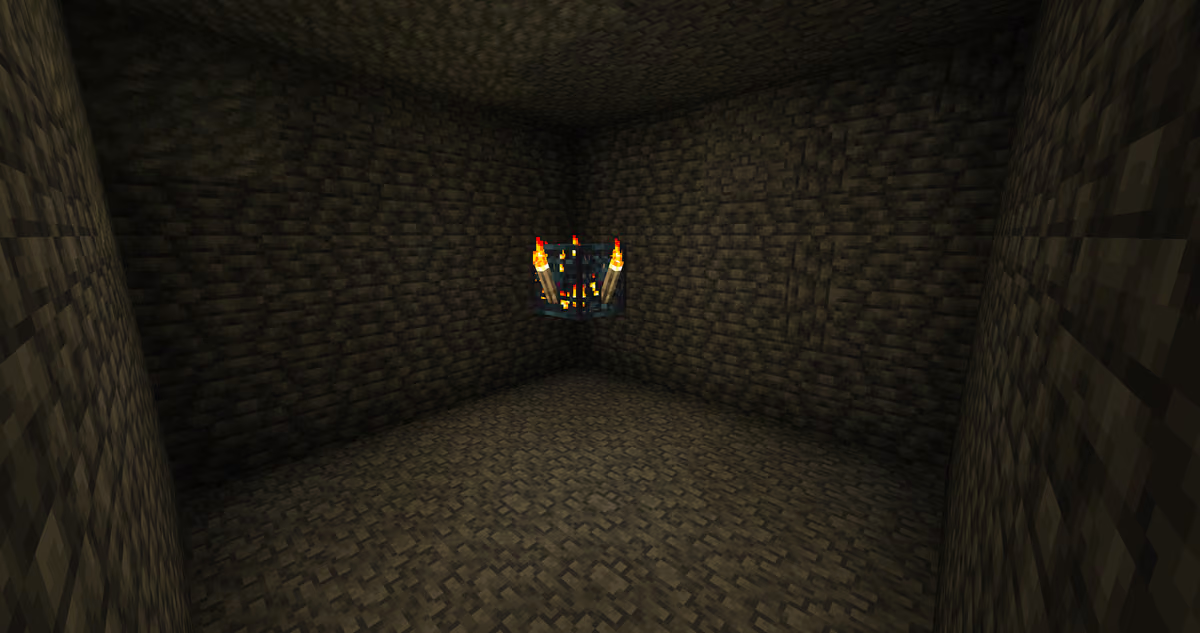
A spawner with torches in a cleared square room.
Step 2. Water
To avoid carrying water buckets back and forth, make a temporary infinite water source: dig a 1×3 hole, and pour two buckets in the outer blocks — the hole will become a source from which you can scoop endlessly. Pour water in all corners of the room so that the flows converge to one central block. Break the floor around this central block and replace it with bottom slabs — this makes the water flow evenly to the center without mobs getting stuck along the way. Leave the central block dry: this is the future drop shaft.
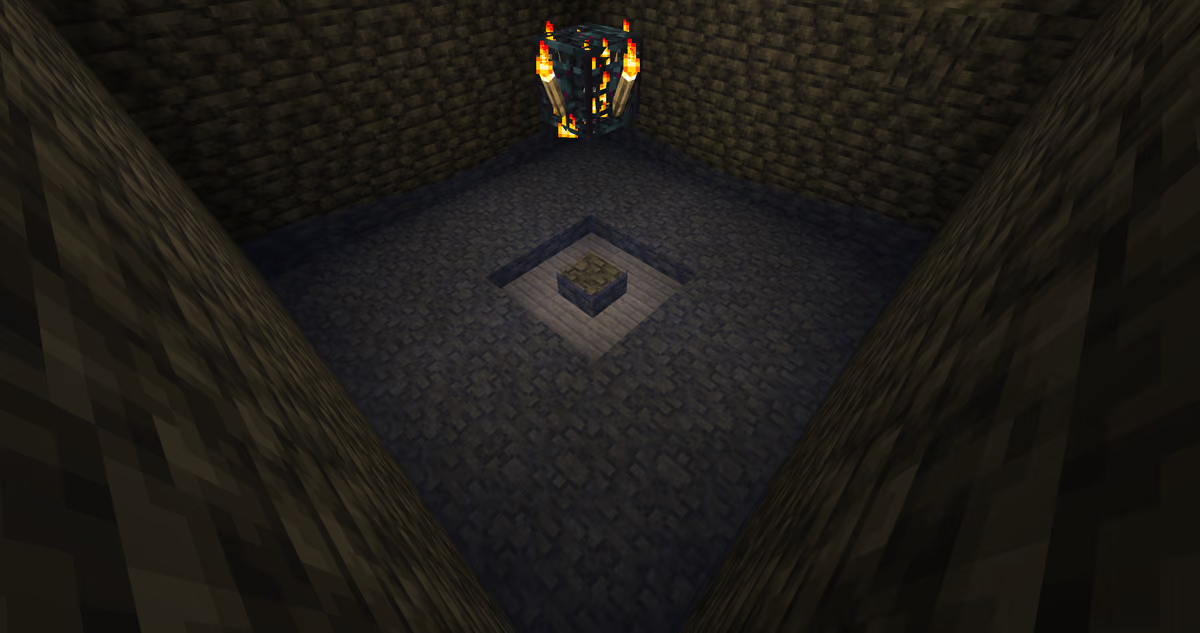
Water streams from the corners converge to the central dry block.
Step 3. Drop Shaft and Dripstone
Where the dry block is, dig a shaft 11 blocks deep. At the bottom, dig a small chamber around yourself and place torches so nothing spawns here. The finished shaft becomes the channel where mobs will fall.
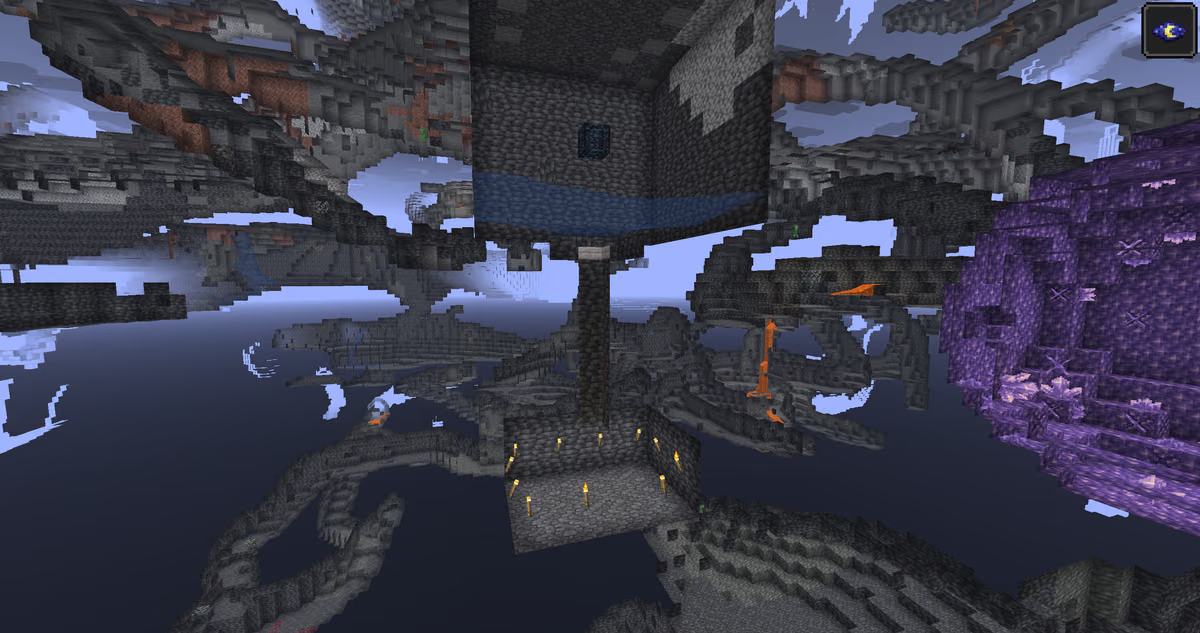
Drop shaft with a room at the end
Step 4. Collection System
Dig a 3×2 niche under the shaft and place a double chest. Right next to it, place a hopper pointing into the chest — it should be exactly under the shaft's hole. Place a rail on top of it, and a minecart with a hopper on the rail, then break the rail: the minecart will remain sitting directly on the hopper.
Now assemble a simple mechanism with a piston and lever, and push the cobblestone wall right into the minecart with the piston. This puts the minecart inside the block, allowing it to collect items through it, while the non-solid wall lets the loot fall down. Place a Pointed Dripstone on top of the wall.
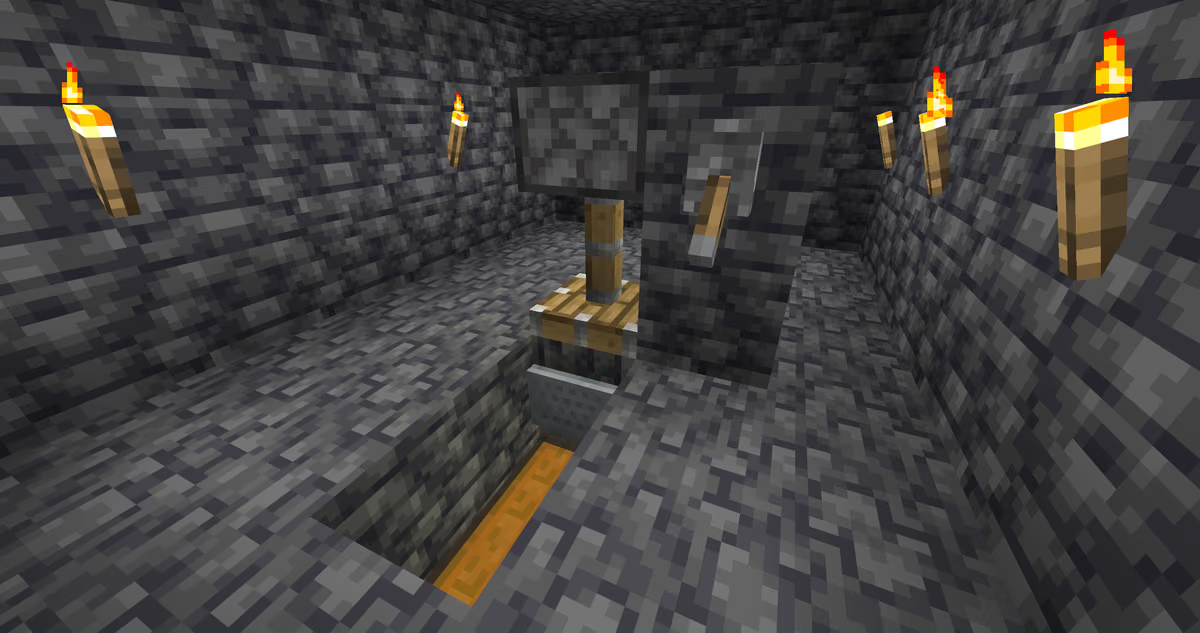
Double chest, hopper, minecart, and piston in the niche under the shaft
Step 5. Starting the Farm
Surround the dripstone with glass on all sides, leaving a one-block gap at the mob's feet level — you will finish off the skeletons through it, and they won't be able to escape. From this chamber, dig up with ladders back to the spawner room.
Once back up, place a slab on top of the spawner — this prevents skeletons from getting stuck on the block itself. Now remove all torches from the spawner room: it will activate in the dark. Leave the lighting in the shaft, bottom chamber, and on the ladders — you don't need extra spawns there.
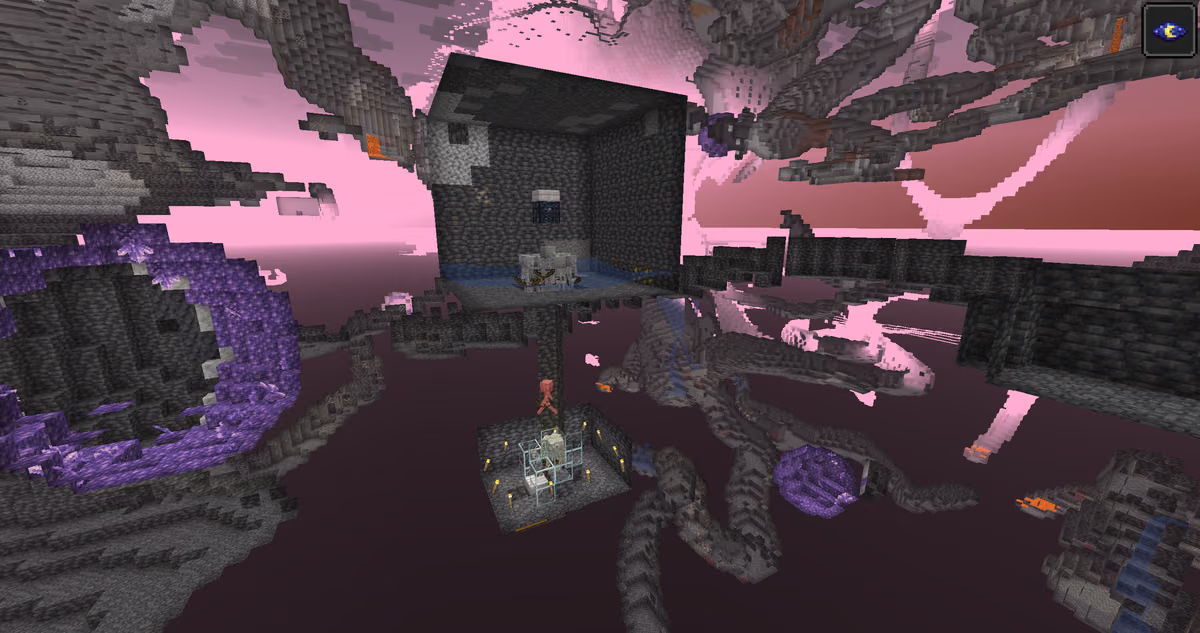
Fully finished farm
Go down to the kill chamber. From here, ~14 blocks below, the spawner remains active because you are within 16 blocks of it. Don't go back up to the spawner room, otherwise, mobs will spawn right on top of you. Skeletons will fall onto the stalagmite, and you'll just need one hit. Bones, arrows, and occasionally a bow or armor will collect in the chest.
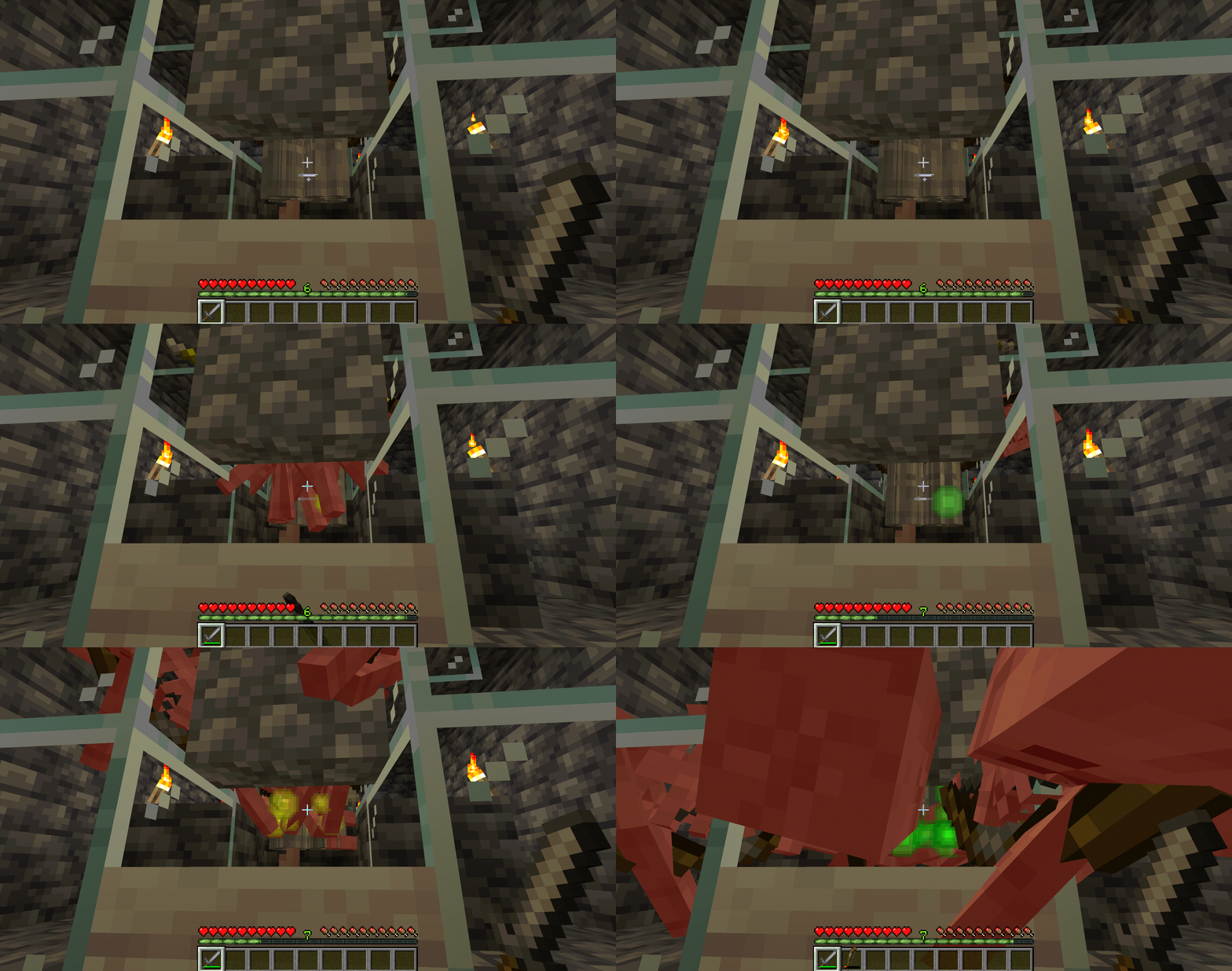
Skeleton falls on the stalagmite, the player finishes it off with one hit
Bone Meal
The collected bones can be turned into fertilizer in the crafting grid: 1 bone yields 3 bone meal. A skeleton drops 0–2 bones per kill (more with Looting enchantment), so an active farm quickly covers the bone meal needs for wheat, carrots, potatoes, or saplings.
Rates and Maintenance
The spawner ignores the general mob cap, so it works steadily as long as two conditions are met: you are within 16 blocks of it, and there are not 6+ skeletons gathered nearby. For this reason, the main rule is to kill the fallen ones in time and not walk away to the other side of your base, otherwise spawning stops. If the rate noticeably drops, there are usually two reasons: light leaked into the spawner room, or mobs are getting stuck on the block above. In the first case, remove extra lighting; in the second, check if the spawner is covered with a slab.
Common Mistakes
Spawner is inactive. There's a light source nearby — remove all torches from the spawner room, a light level of 0 is required.
It's dark, but no mobs. You are too far or too close. Stay within 16 blocks, but not right against the spawn zone.
Spawner produces few mobs. If 6+ skeletons gather near it, it stops. A drop of 11 blocks moves mobs out of the detection zone — make sure the shaft is deep enough.
Loot doesn't reach the chest. The minecart is not "inside" the block. Check that the piston pushed the wall into it, and the hopper points into the chest.
Skeletons jump out of the chamber. It is not fully enclosed — leave only a gap to strike through.
Conclusion
A bone meal farm provides an uninterrupted supply of bones and fertilizer without any redstone components, besides a piston. The main limitation is that it requires a ready-made skeleton spawner, so in a new world, you'll first have to find a dungeon. Once you have a spawner, this setup is perfect for both early survival and as a stable source of experience and arrows in a permanent base.
Leave a comment
Links will be stripped
No comments yet. Be the first to share your thoughts.