
How to Build a Mob Farm in Minecraft
Learn how to build an efficient ocean mob farm in Minecraft — from access shaft and kill chamber to spawning platforms, with no redstone…
How to Build a Mob Farm in Minecraft
A mob farm is a structure that forces hostile mobs to spawn in a dark chamber, sweeps them with a water current into a central shaft, and drops them from a height that leaves them one hit from death. The player only needs a single finishing blow, and all the drops go straight into chests automatically. This kind of grinder gives a steady stream of gunpowder, bones, and arrows without redstone or complex mechanisms — in Minecraft it's built from basic blocks and a few buckets of water.
Preparation
The zero-light-level spawning mechanic works in version 1.18 and later.
Materials:
Building blocks — 16,5 stacks (platforms, walls, roof, drop shaft)
Temporary blocks — 2 stacks (for climbing up, removed after the build)
Ladders — 117
Trapdoors — 64
Carpets — 36
Torches — 10
Slabs — 4
Hoppers — 4
Chests — 2
Water buckets — 2
Bed — 1
You'll need the bed to sleep through the night during construction so you don't become a target for your own mobs.
Step 1. Location and height
You can build the farm over any land, but it works better over the ocean: there are no caves or dark areas under open water to steal from the mob cap, so almost the entire spawn budget goes to the structure itself. Pick a spot over the ocean and climb up with temporary blocks to Y=180 (water level is Y=63, so the pillar comes out to roughly 117 blocks). The base of the whole farm is built at this height.
Step 2. Access shaft
From the base, place one more block upward, climb back down along the pillar, and cover it with ladders for all 117 blocks — this is the climb up to the chamber and back, a single continuous line from the water to the top.

A massive pillar of blocks with ladders
Step 3. Kill chamber
At the base level, build a 7×4 platform and lay out the chamber itself: 2 blocks on each side (6 blocks) and a double chest next to it. Connect 4 hoppers to the chest, raise the chamber walls by 2 blocks, leave a one-block gap above the chest (this is the player's entrance), and place slabs on top of the hoppers. Mobs will land on the slabs, and the drops will fall through them into the hoppers and then into the chests.
Now build the drop shaft above the chamber so that it's exactly 22 blocks from the slabs to the top (roughly Y=202–203). A 22-block fall leaves skeletons, creepers, and zombies with about half a heart — you can finish them off by hand.
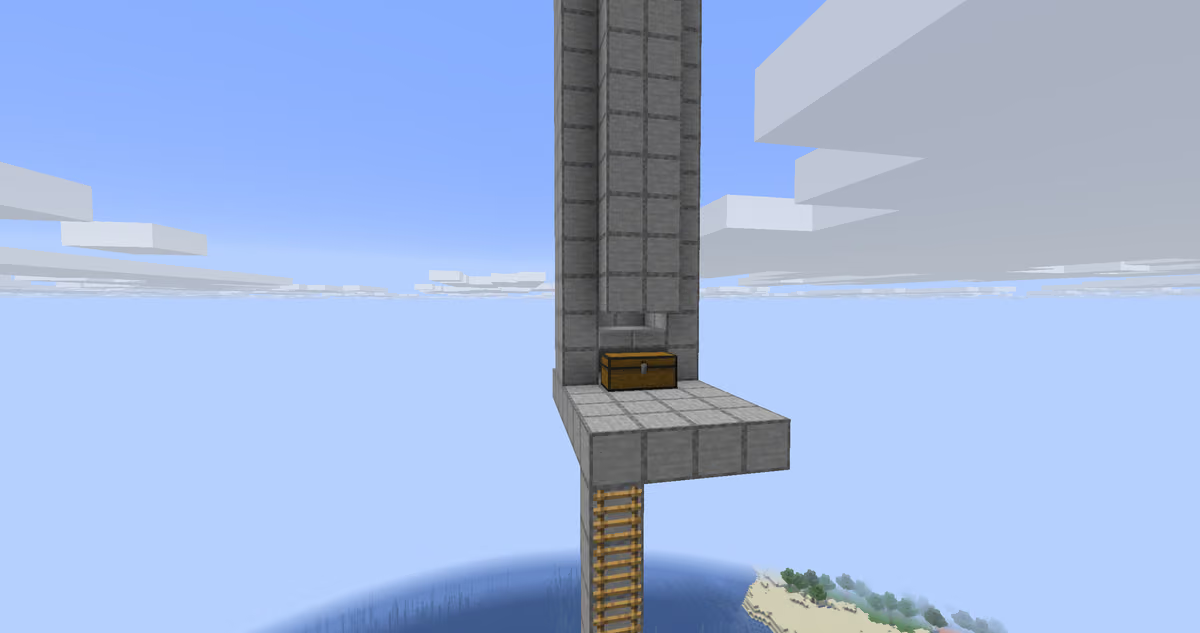
Kill chamber — slabs above the hoppers, double chest underneath
Regional difficulty: over time, zombies and skeletons start spawning with armor and enchantments. These mobs survive the fall and need 2–3 hits.
Step 4. Spawning platforms
At the top of the shaft, run a line 7 blocks long and 2 blocks wide out from the center in each direction, and raise its edges by 2 blocks — these are the water channels. Fill in the open areas between the channels to build four 8×8 platforms: this is where the mobs will spawn. Leave the central opening above the shaft open.
Line the edge of the opening and the channels with trapdoors and open them — a mob treats an open trapdoor as a solid block, walks onto it, and falls through into the shaft. On the dry blocks of the platforms, place carpets no more than 2 blocks apart: spiders need a free 2×2 square to spawn, and the carpets break that up, so spiders don't clog the farm while taller mobs spawn unobstructed.
Pour one bucket of water onto each platform near the outer edge so the current flows toward the central opening. Water pulls mobs up to 8 blocks — enough to sweep them all the way to the trapdoors.
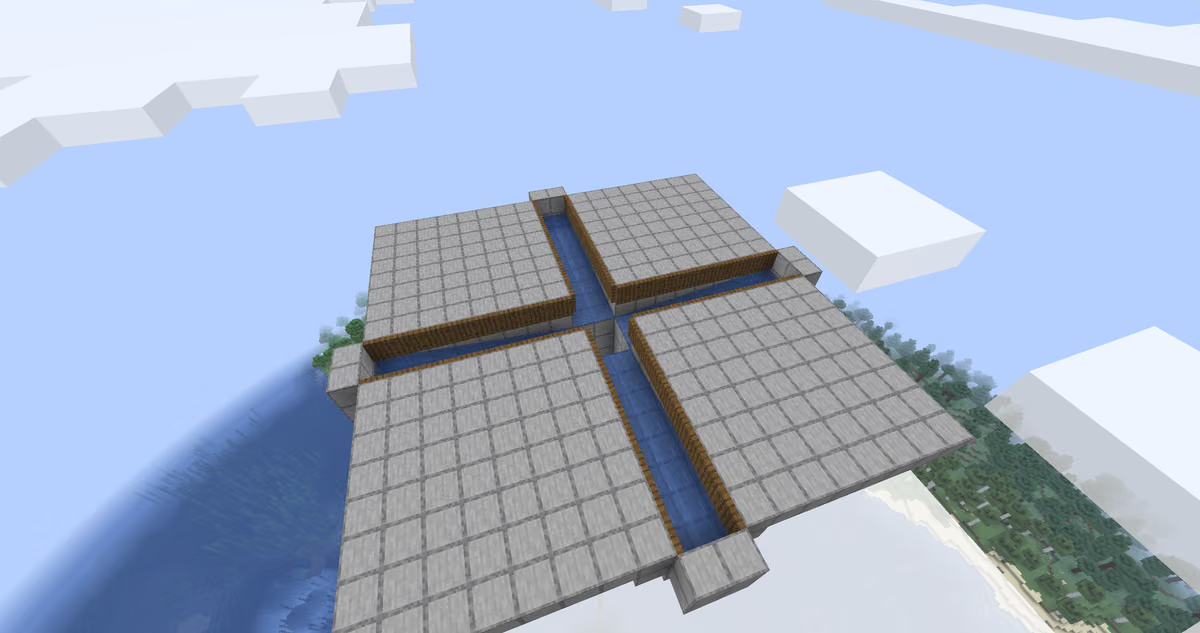
4 water channels flowing toward the center
Step 5. Darkening and perimeter
Raise the platform walls by another 2 blocks and cover the structure with a roof — the inside must be completely dark (light level 0), otherwise spawning won't happen. Place torches around the outside perimeter and on the roof so mobs don't spawn on top and eat into the farm's spawn budget. There should be no torches inside the spawning chamber.
Remove the temporary blocks. Climb down the ladder into the kill chamber — mobs will start falling on their own.
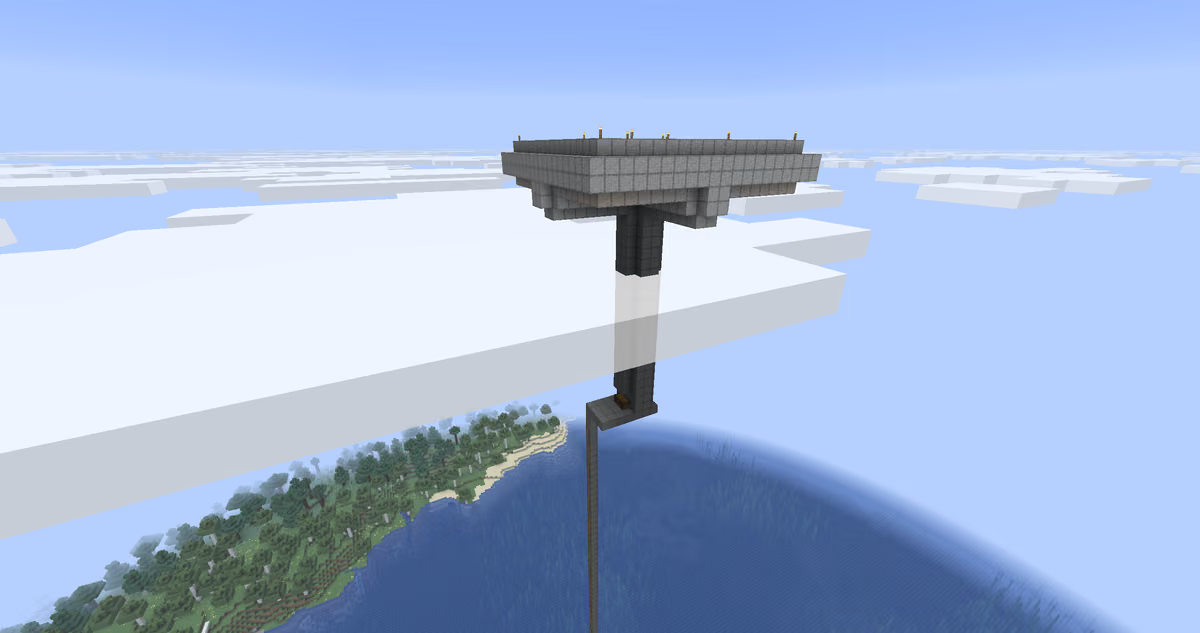
The finished farm from outside over the ocean, roof with torches around the perimeter
Spawn radius: hostile mobs appear no closer than 24 and no farther than 128 blocks from the player. Standing in the chamber, you're close to the platforms, so mostly the far edges are active. Light up every cave within a 128-block radius with torches — otherwise they'll steal the mob cap from you.
Conclusion
A mob farm handles the routine collection of basic drops: gunpowder for TNT and fireworks, bones for bone meal, arrows, and string. Unlike a spawner grinder, it isn't tied to a dungeon you happen to find, and it works anywhere there's darkness and height. Its weak point is that passive spawning depends on the mob cap and the distance to the player, so the output is lower than active farms with dispensers. The method is ideal for single-player survival when you need a steady but low-maintenance drop collector without redstone.
Leave a comment
Links will be stripped
No comments yet. Be the first to share your thoughts.