
How to build a froglight farm in Minecraft
A froglight farm provides a steady stream of this block without manually hunting magma cubes. Learn how to easily build one in Minecraft.
How to build a froglight farm in Minecraft
A froglight farm provides a steady stream of this block without manually hunting magma cubes. In Minecraft, a froglight is dropped only when a frog eats a small magma cube, and magma cubes themselves live only in the Nether. This design places frogs right next to a natural magma cube spawner in a bastion remnant, so the lights are collected automatically into a chest while you stand nearby.
Version: froglights and frog mechanics are available from 1.19 and work in all newer versions.
Difficulty: switch to "Peaceful" difficulty while building. This way piglins in the bastion won't interfere, and the spawner won't release magma cubes prematurely.
How it works
The spawner generates magma cubes of three sizes. The frog only attacks the smallest one: when it swallows a small magma cube, a froglight block drops in its place as an item. Frogs ignore the large and medium specimens, so they need to be reduced in size. Powder snow serves this purpose — magma cubes take increased freezing damage from it, die, and split into smaller ones. The small ones are left for the frogs, the finished block falls onto the carpets, and hoppers underneath drop the loot into a chest.
The resource itself emits light at level 15 — the highest among light source blocks, plus it does not catch fire or melt from lava. Because of this, it is eagerly placed where a normal torch or campfire would be a risk.
What you will need
List of materials for one farm:
487 blocks — any solid material for walls, floor, and roof
9 hoppers and 2 chests — a double chest for collection
9 carpets
1 powder snow bucket
1 glass block and 4 slabs
6 ladders
Frogs of the desired color, a boat, and a lead for transportation
Step 1. Frame of the chamber around the spawner
Find a magma cube spawner in a bastion remnant — there is always a chain hanging above it, which is a reliable sign. Break 2 blocks above the spawner and place your blocks there. Then lower a column of 5 blocks under the spawner, and from the bottom block extend 5 blocks in all four directions. These extensions will become the foundation of the future floor.
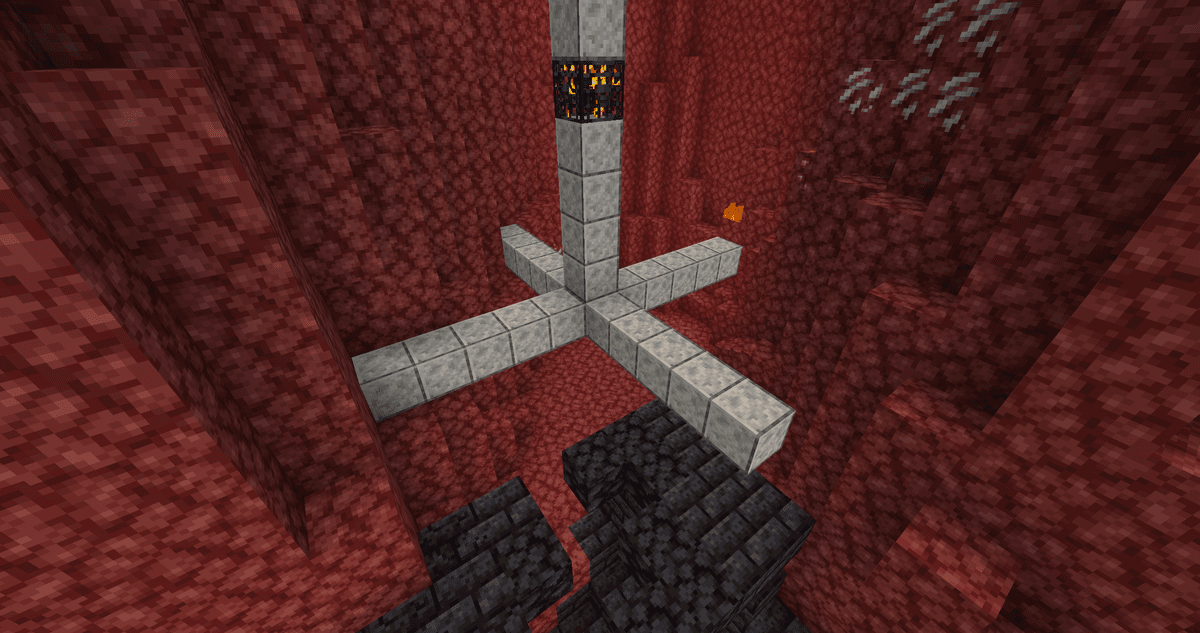
Magma cube spawner in a bastion remnant with the initial frame
Step 2. Walls, roof, and chamber-box
Clear the space within this area and connect the extensions into solid platforms. Remove the excess from the top and start the roof from the second block down. Build the walls and connect them with the floor and roof to form a sealed box around the spawner. Approximate size — about 9×9 blocks and roughly 6 blocks high. Inside this box, magma cubes will spawn.
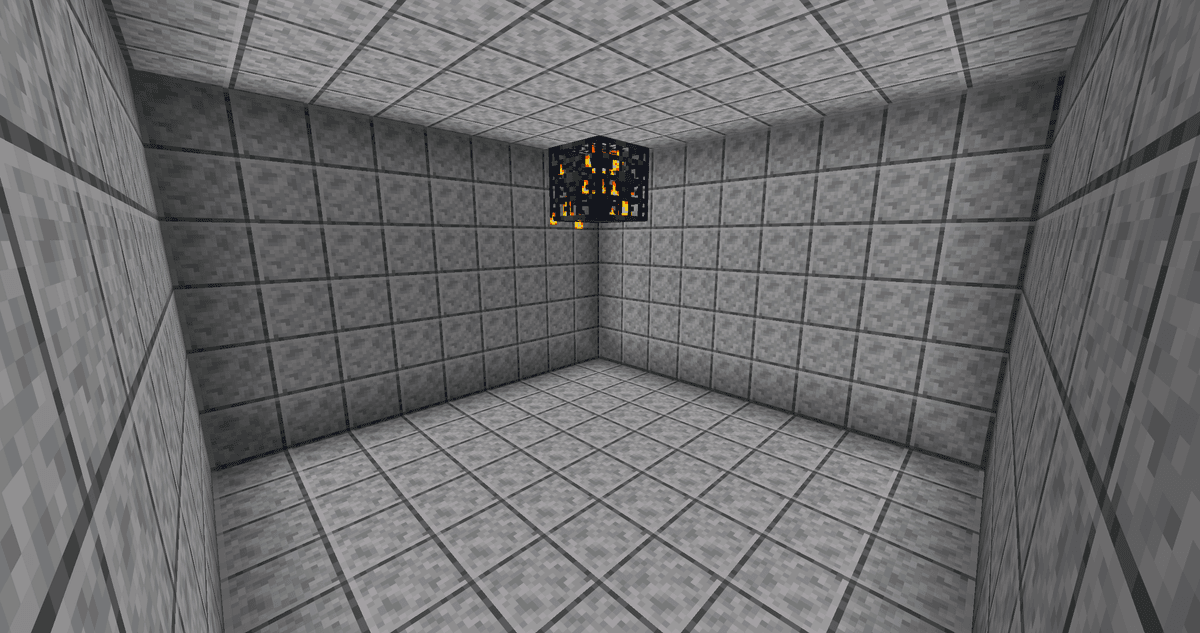
Chamber for magma cubes to spawn
Step 3. Player room and entrance
On one side of the box, break out a 3×2 hole and place blocks under it to have a place to stand. Enclose this ledge into a small room from which the inside of the farm is visible — this is where you will stand while it operates. The spawner is active only within a 16-block radius of the player, so the room is placed right next to it. Place 1 trapdoor on top of the box for entry and exit, and use ladders to climb up inside.
Without a player nearby, the spawner goes dormant. Do not move further than 16 blocks away, otherwise magma cubes will stop spawning.
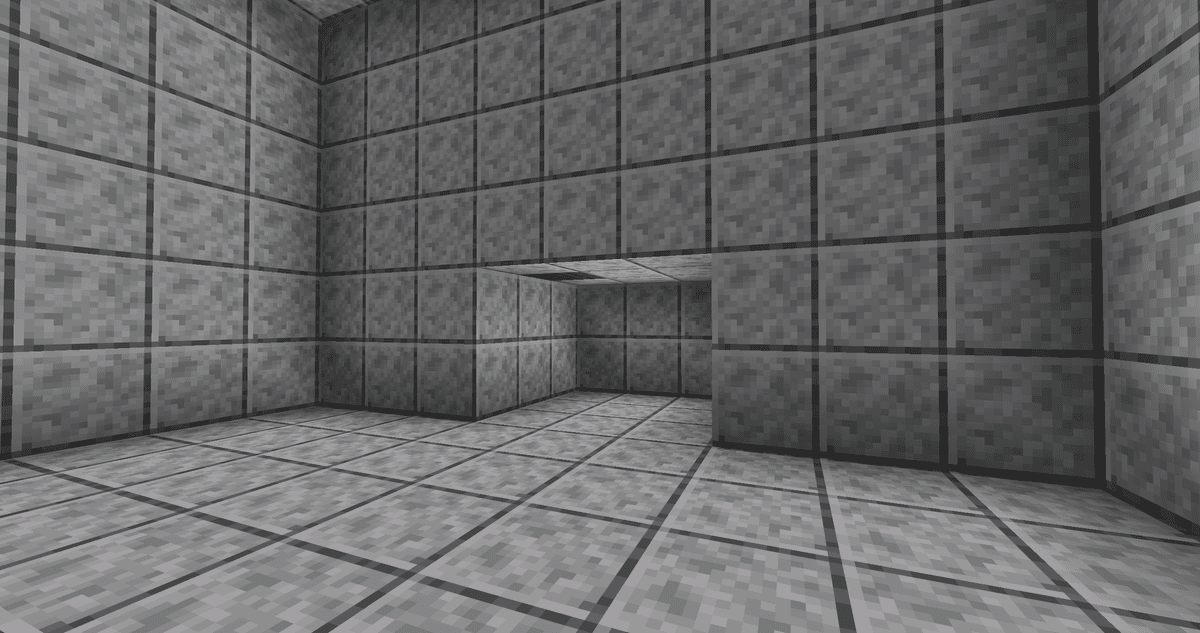
Player room built into the wall
Step 4. Collection pit 3×3
Under the entrance hole, break through the floor 3×3 with a depth of 4 blocks — this is where magma cubes will fall and frogs will eat them. At the bottom, break 2 more blocks and place a double chest. Above it, remove 9 more blocks and place 9 hoppers pointing into the chest.
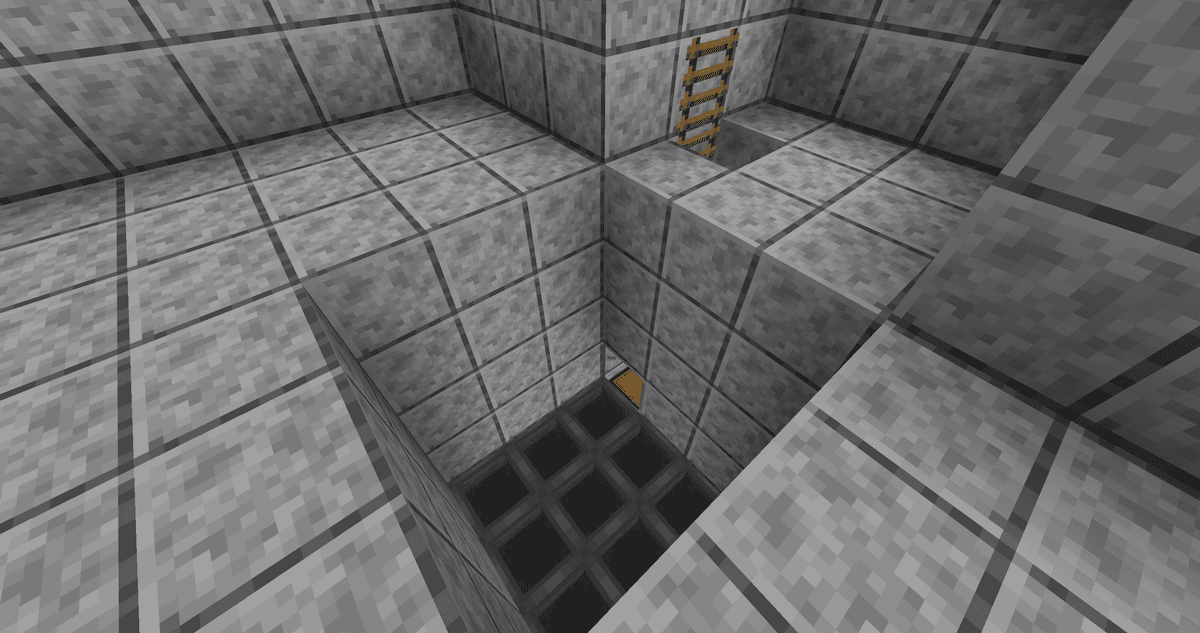
Pit 3×3 with a depth of 4 blocks under the farm chamber with hoppers and a chest
Step 5. Bottom of the pit: carpets and powder snow
Place 9 carpets on the hoppers. An item dropped on a carpet still ends up in the hopper, but frogs can walk freely on the carpet itself. In the center, instead of a carpet, place powder snow from the bucket — it will finish off the large and medium magma cubes. Cover the chest underneath with a solid block and glass: this prevents mobs from getting to it, while the contents remain visible. Close the player room with slabs and make a path from it to the chest to collect the accumulated loot.
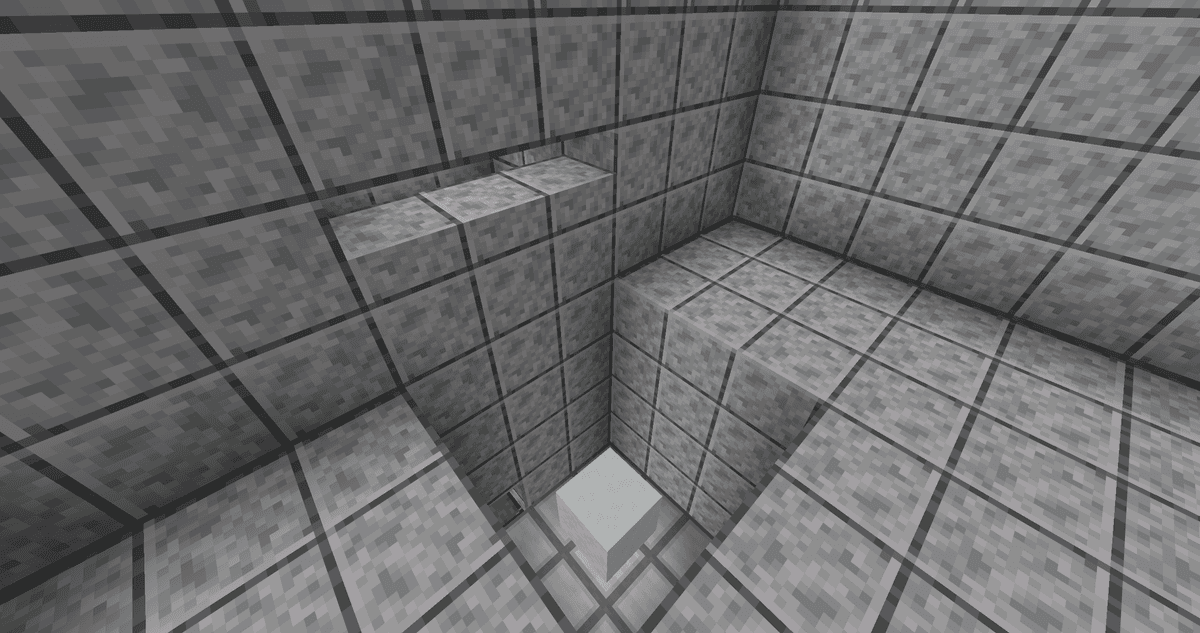
Bottom of the pit with carpets on hoppers and powder snow in the center
Step 6. Introducing the frogs
Frogs are led to the Nether on a lead through a portal. Once there, put the frog in a boat and push the boat into the 3×3 hole — this way the animal easily drops exactly into the pit. The farm accepts any of the three types of frogs, and the more there are in the pit, the faster light is produced.
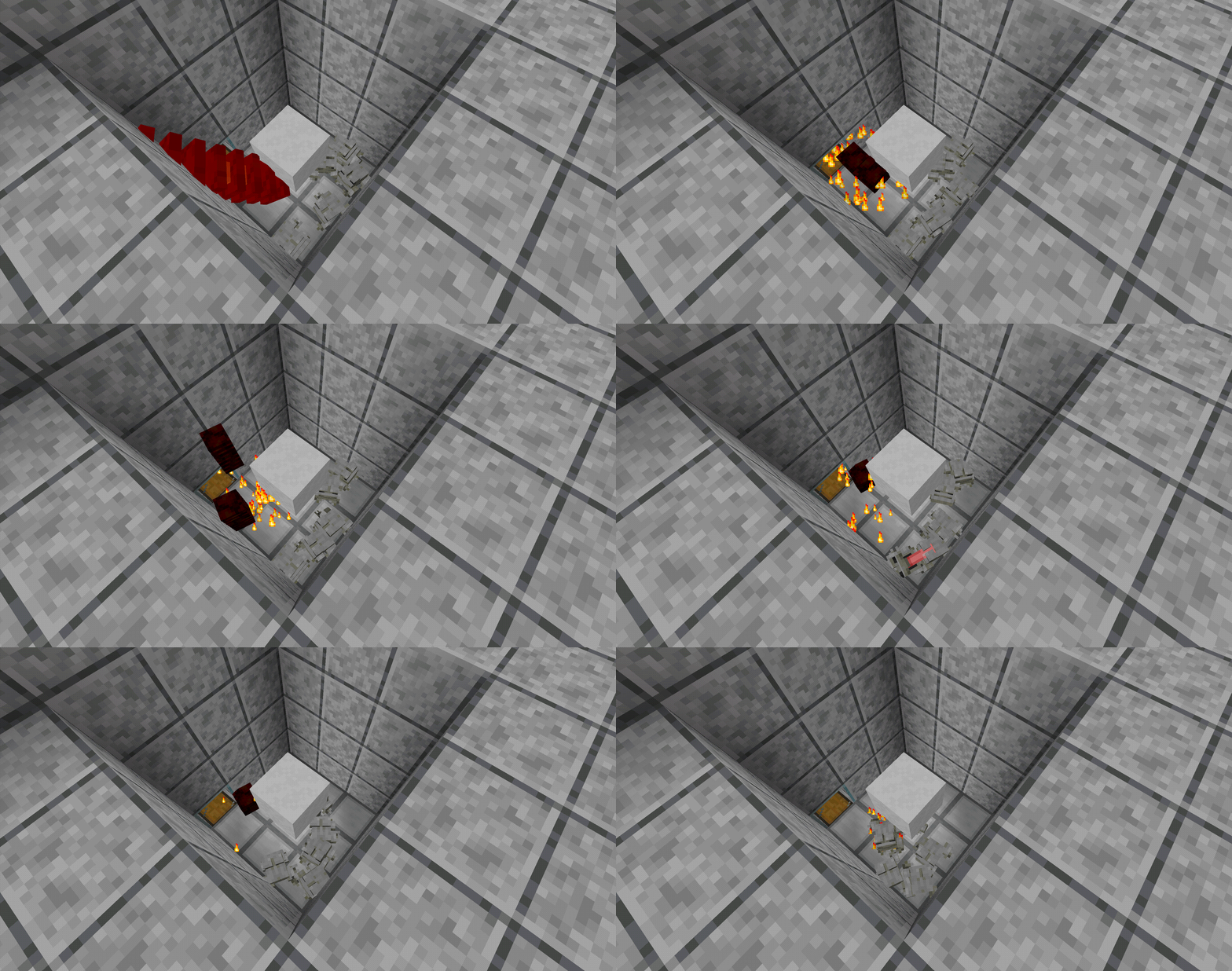
A frog extends its tongue, swallows a small magma cube, and drops a froglight block
Light colors and frog types
The color depends on the type of frog, and the type is determined by the biome in which the tadpole grew up — not where the frog is now. To collect all three colors, raise tadpoles in different biomes and bring the adults to the farm.
Frog type | Tadpole growing biome | Froglight |
Temperate (orange) | swamp, forest, taiga, river | Ochre |
Warm (white) | desert, jungle, savanna | Pearlescent |
Cold (green) | snowy biomes | Verdant |
Common mistakes
The frog does not eat large magma cubes. If light does not appear, check if powder snow is placed and if it shrinks the cubes to small ones.
The ready item block disappears over time. Hoppers must be placed strictly under all nine carpets, otherwise some loot will miss the chest.
The frog falls into the powder snow. That is why only one block of snow is left in the center, and the rest of the bottom is covered with carpets — frogs stay on them.
The player moved too far away. Beyond 16 blocks, the spawner does not work, so do not leave the room while farming.
The magma cube does not fall into the pit. Ensure that the column from the spawner to the 3×3 hole is unobstructed and leads straight down.
Conclusion
A froglight farm on a magma cube spawner is compact and eliminates the need to hunt magma cubes manually, unlike gathering in basalt deltas, where spawns are scattered and slower. Its main limitation is speed: it is a steady but not massive source, and the available colors are limited to the frogs you brought in. The design is suitable for those who have already stumbled upon a bastion with a spawner and want a stable supply of light for decorating builds in Minecraft.
Leave a comment
Links will be stripped
No comments yet. Be the first to share your thoughts.