
How to Build an XP Farm in Minecraft
An XP farm in Minecraft is a structure that provides a steady stream of experience. Without one, fully enchanting a single set of diamond…
How to Build an XP Farm in Minecraft
Article written and verified for Java Edition 26.1.2
Range of supported mechanics: 1.18+ for classic designs
An XP farm in Minecraft is a structure that provides a steady stream of experience. Without one, fully enchanting a single set of diamond armor means hundreds of killed mobs or thousands of smelted items. On top of that, it is precisely a steady flow of XP that triggers the Mending mechanic: without it, your elytra and mining gear eventually break with no chance of repair. Below are four working types of XP farms, from the simplest to the most advanced.
Basic rules of hostile mob spawning
Any mob farm in the Overworld relies on four mechanics. Since version 1.18, hostile mobs only spawn on blocks with a light level of 0 — a single torch within a radius of about 13 blocks blocks spawning around it. Mobs appear within a spherical radius of 24 to 128 blocks around the player: closer is a dead zone, farther and spawning stops. The mob cap in the Overworld is around 70 at a time, so caves within 128 blocks of the farm fill that cap instead of it. Finally, if the player moves more than 128 blocks away from a mob, it despawns instantly.
Type 1. Furnace farm — the simplest option
It does not depend on mobs, lighting, or time of day. A furnace yields 0.1 units of experience per smelted item and stores that experience inside. The player collects 100 smelted items — and immediately gets 10 units of experience as a bonus on top of the product itself. A single cactus smelter gives about 360 units of experience per real hour; on potatoes — 252; on raw kelp — 72, but such a farm is built in ten minutes and requires no rare resources whatsoever.
The design is standard: top chest → hopper down → furnace → hopper down → bottom chest. A third hopper with fuel is attached to the side of the furnace. A lever must be placed on the furnace — while it is active, the hopper is blocked by a redstone signal and does not pull the product out of the furnace. The raw material is loaded into the top chest, the fuel into the side one.
⚠️ Without a lever on the furnace, the farm gives no experience at all. The hopper pulls the product out faster than it can linger, so you periodically need to flip the lever and take the item from the furnace into your hand to collect all the accumulated experience.
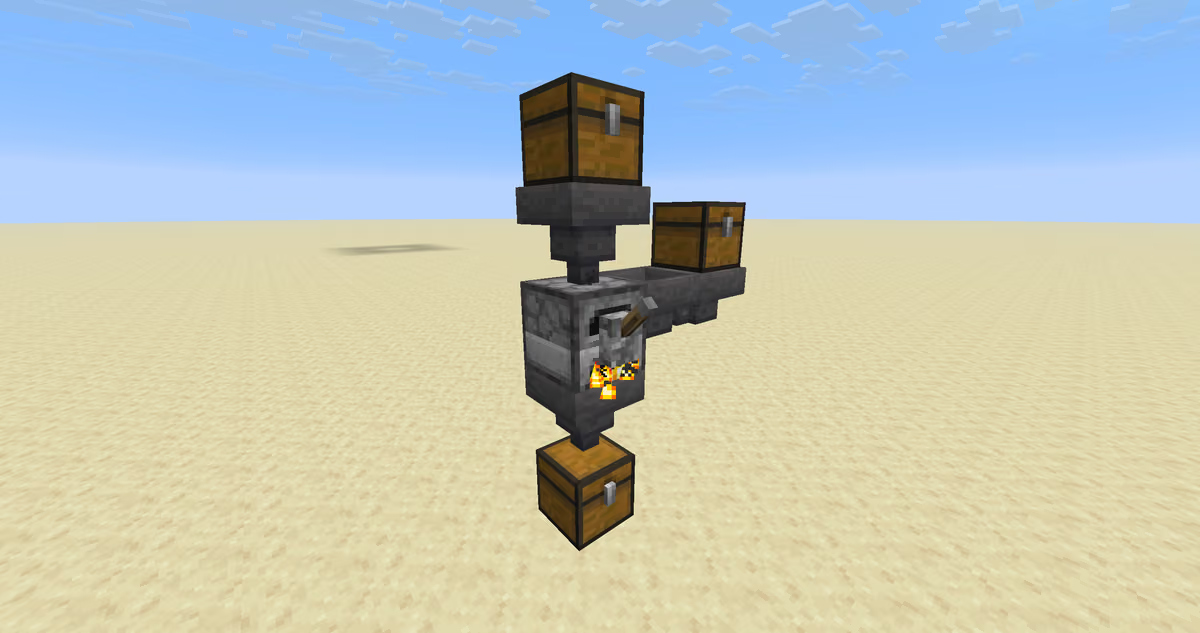
An experience farm using a furnace
Type 2. Dark room — the classic mob farm
It provides experience and resources (gunpowder, bones, arrows, string) at the same time. The principle is a large spawn platform with a light level of 0, from which mobs fall into a narrow collector from a height of about 22 blocks. After the fall, ordinary mobs are left with 0.5 hearts, the player finishes them off with a single hit and receives full experience for the kill.
The spawn platform is a flat 9×9 or 11×11 area with a ceiling 2 blocks high. In the center is a gap into which mobs flow with streams of water. The most important thing is the location. On the surface of the ground, the farm will run at 5–10 % of the stated rate: surrounding caves will steal the spawns. Two options that actually work are the sky above the ocean (height 180+ blocks, at least 128 blocks of water around) or an artificial area above land with fully lit caves within a 128-block radius.
⚠️ Spiders can clog the channels. A spider spawn requires a 3×3 area, so it cannot pass through a 1×1 hole and will hold the mob cap on the platform. The solution is a row of signs or trapdoors around the gap.
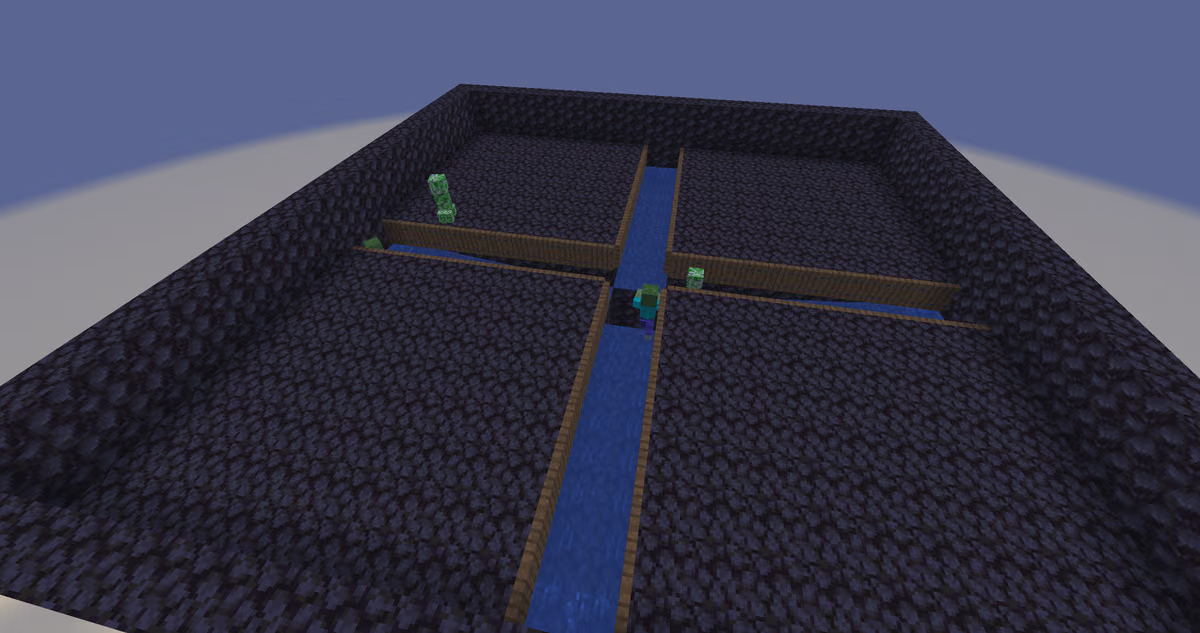
Cutaway diagram of a dark-room mob farm — 11×11 spawn platforms, water streams converging toward the central shaft, with a collection point and hoppers at the bottom
Type 3. ENDERMAN farm in the End
The fastest XP farm in the game. An ENDERMAN gives 5 units of experience — the same as a ZOMBIE, but in the End the ENDERMEN are the only ones that spawn in the main dimension, so the entire mob cap is guaranteed to work for the farm. On a well-built design, 30 levels from scratch take 1–2 minutes of AFK.
How it works: a platform with a ceiling 2 blocks high is built above the central island of the End. Inside is an ENDERMITE in a minecart. ENDERMEN that spawn within a radius of about 62 blocks of the ENDERMITE aggro onto it and head toward the lure, but on the way they fall down a drop shaft 43 blocks deep. At the bottom of the shaft the ENDERMAN has 0.5 hearts and is finished off with a single hit.
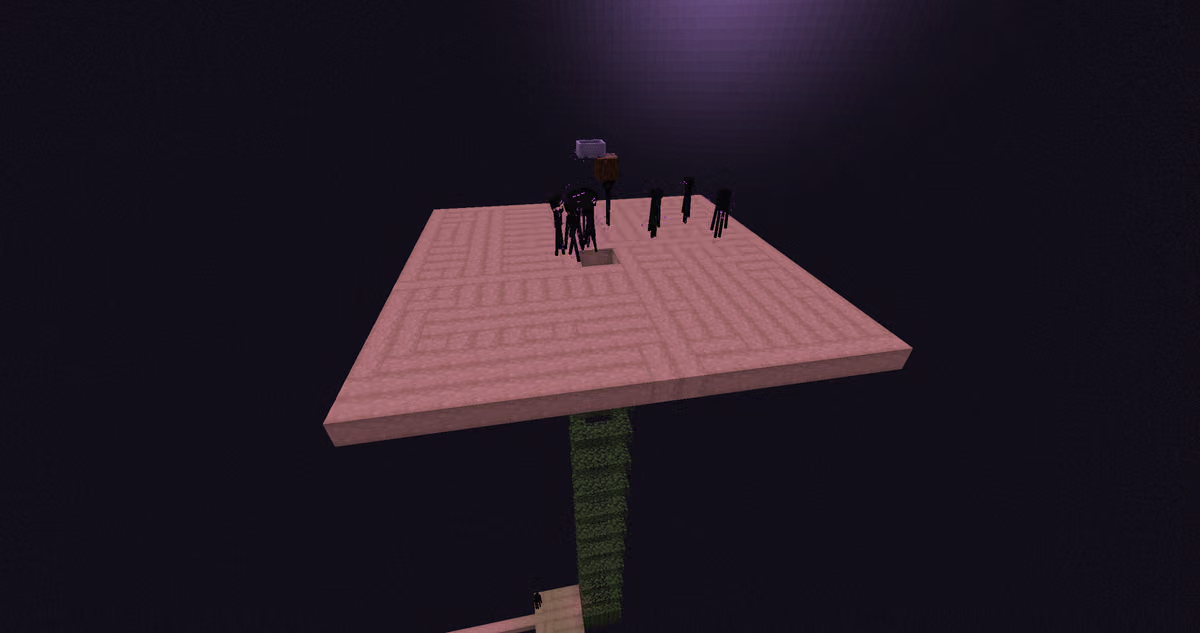
An ENDERMAN farm where they run toward the ENDERMITE and fall down
Type 4. BLAZE farm in a Nether Fortress
A BLAZE gives 10 units of experience — twice as much as a ZOMBIE, SKELETON, or ENDERMAN. Its health is the same (20 units), so in terms of "experience per hit" the BLAZE is the most rewarding of all natural mobs. A separate bonus is the Blaze Rod, the only source of Blaze Powder for potions and Eyes of Ender.
How it works: next to a natural BLAZE spawner in a Nether Fortress, a closed glass room is built from which the BLAZES cannot fly away. Through a side gap of trapdoors or through a lava flow, the BLAZES are pushed to the kill point, where the mob has 0.5 hearts and is finished off with a single sword hit.
Before building, the spawner must be surrounded with torches to temporarily stop spawning — otherwise you will face a swarm of BLAZES in a narrow corridor before you even finish. After building, the torches need to be removed.
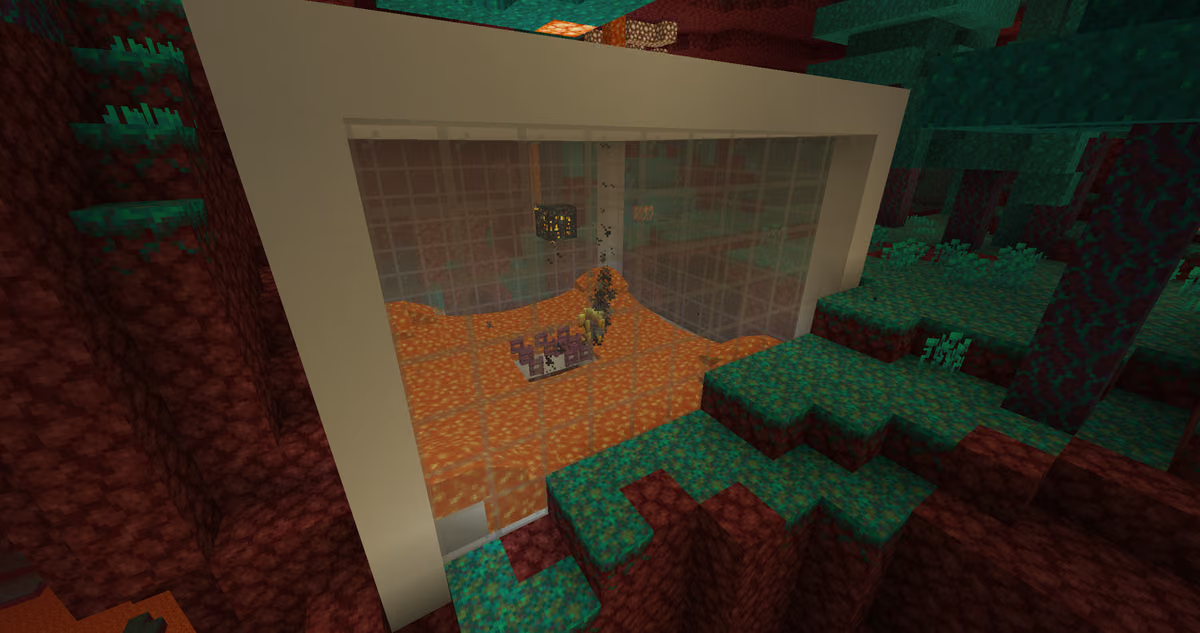
A BLAZE farm, side view
How to collect experience properly — the catch with Mending
The Mending enchantment converts gained experience into the durability of an active item: 2 units of durability per 1 unit of experience. As long as an item with Mending is in your hand or armor slots and it is not at full durability — all the experience goes to it rather than into your level bar. It works only on active slots: main hand, off hand, and the four armor slots. An item in the regular inventory is not repaired. If several active items with Mending are present at once, the game randomly chooses which one to repair from each experience orb.
Common mistakes
Surrounding caves are not lit. The most frequent reason a farm produces 5–10 % of its rated numbers. It is easy to check: go down below the farm and inspect the caves within a 128-block radius.
The AFK point is closer than 24 blocks to the spawn platform. The spherical dead zone blocks all spawning. The point should be 25–32 blocks from the nearest spawn block.
Spawn block of glass, slabs, leaves, or stairs. Mobs do not spawn on non-full blocks. The platform floor must be a solid block with a full top surface.
A 22-high shaft, but with water. Water cancels the fall completely — the mob will land with 100 % health. The fall must be dry.
AFK with a sword without Mending. If the goal is to repair an elytra, it must be worn before going AFK; otherwise the experience goes into an empty bar and the armor stays broken.
Conclusion
The optimal XP farm for most scenarios is a combination of a furnace for passive farming and an ENDERMAN farm for active farming. The first works without the player's presence, the second quickly restores the durability of an elytra and netherite tools through Mending. The BLAZE farm covers both the need for experience and for Blaze Rods for potions; the dark room is for when you need a resource drop alongside experience. All four types of XP farms in Minecraft are built on the very same basic rules — light level 0, a distance of 24–128 blocks, the mob cap, and instant despawn. Understanding these mechanics makes it easy to assemble a structure tailored exactly to your task.
Leave a comment
Links will be stripped
No comments yet. Be the first to share your thoughts.