Naturalist — realistic animals mod for Minecraft
Naturalist adds 24 new animals with realistic behavior, food chains, and unique drops to Minecraft. Learn about their features, taming, and…
Naturalist adds 24 new animals with realistic behavior, food chains, and unique drops to Minecraft. Learn about their features, taming, and breeding!
Naturalist — realistic animals mod for Minecraft
Minecraft version the article was tested and written on: 1.20.1
Supported versions range: 1.18.2 – 1.21.1
Required library: GeckoLib, Fabric API (for Fabric setups)
Minecraft's vanilla fauna relies on a small set of passive mobs that barely react to each other. Naturalist adds 24 animals (excluding variants) with their own behavior, drops, and place in the food chain. Bears hunt deer, alligators hunt swamp wildlife, and some animals can be tamed or bred. The animals populate vanilla biomes and are balanced for survival gameplay.
Behavior and Food Chain
The key difference from vanilla animals is their reaction to the environment and each other. Predators look for prey, herbivores flee, and certain species have a daily cycle: bears sleep during specific times of the day, while a pride of lions goes hunting at night. A bear hunts for salmon, cod, bass, and deer; an alligator hunts for pigs, cows, sheep, deer, and catfish. Each prey list can be overridden via datapack tags.
The spawn biomes for most animals are also defined by tags and can be edited with a datapack — you can add or remove a biome for a specific species without touching the mod itself.
Forest Mammals — Bear and Deer
Bear
A neutral mob of forests and taigas; spawns in a group of up to two, and if there are two — the second is a cub. A killed bear drops no items, only 1–3 experience. Resources are obtained using shears: shearing a bear drops 1–2 Bear Fur, after which it becomes hostile (unless it was asleep). Using string and bear fur, you can craft a Teddy Bear — holding it in your hand allows you to sleep even near monsters.
Bears eat salmon, cooked salmon, honeycomb, sweet berries, and venison, and they naturally find berry bushes, beehives, and campfires. Some foods leave a mark on their paw texture — honey or berries. Bears can be bred, but as soon as a cub appears, the parents will immediately attack the player.
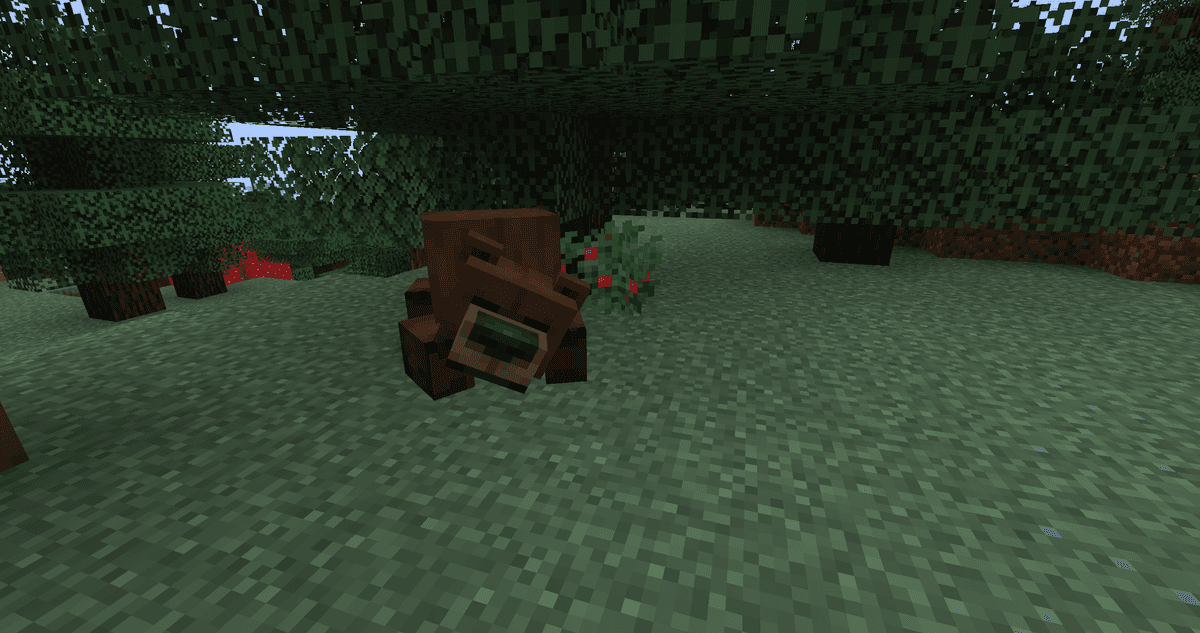
A bear sleeping near a sweet berry bush
Deer
A peaceful herbivore; flees from the player, bears, and other threats. When attacked, a deer panics and nearby individuals scatter. Drops 1–2 Venison (cooked if killed by fire; up to 5 with Looting III). Deer are bred with apples, but you must feed them while sneaking: if you move standing up, the deer gets scared and runs away.
Snakes, Lizards, and Alligators
Snakes
Three variants — common snake, coral snake, and rattlesnake. They spawn individually in different biomes, and their appearance depends on the biome. A snake has a 20% chance to spawn with an item in its stomach: it can be a rabbit's foot, slimeball, feather, raw rabbit, or, by default, raw chicken. The item itself does not drop upon death — the snake only regurgitates it if injured, and it remains inaccessible for 4 seconds while the snake attacks the offender. Without food in its stomach, the snake picks up and swallows dropped items, digesting them in 5 minutes.
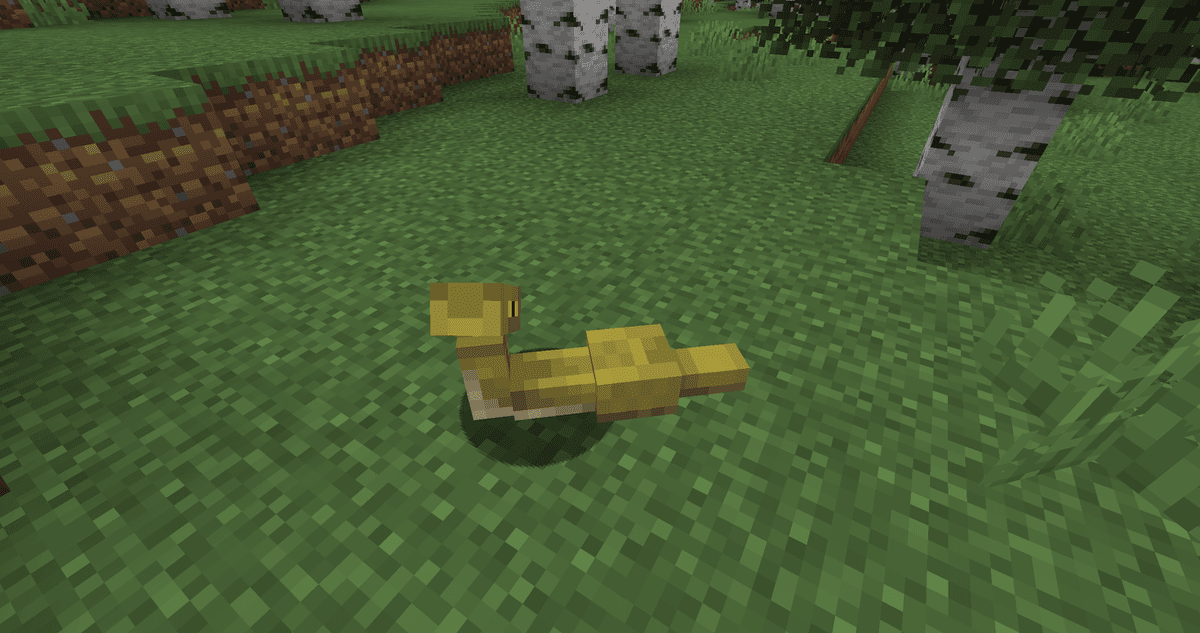
A snake with an item in its stomach
Lizard
Groups of 1–2 in swamps, forests, jungles, and other biomes; appearance depends on the biome. A lizard can detach its tail as a separate entity; a cooked tail drops only if the lizard is set on fire.
Alligator
A neutral predator of swamps; spawns in groups of 1–2 on dirt, mud, or mangrove roots. Adults become hostile near their eggs or if struck. They hunt pigs, cows, sheep, deer, and catfish. Alligators can be bred.
Insects and Small Creatures
Butterfly and Its Cycle
Butterflies fly around forests, plains, and swamps, pollinating flowers and crops (with no byproduct). There are 5 color variations. Feeding it a flower starts the full cycle: butterfly → caterpillar → chrysalis on a tree → a new butterfly emerges in about one in-game day.
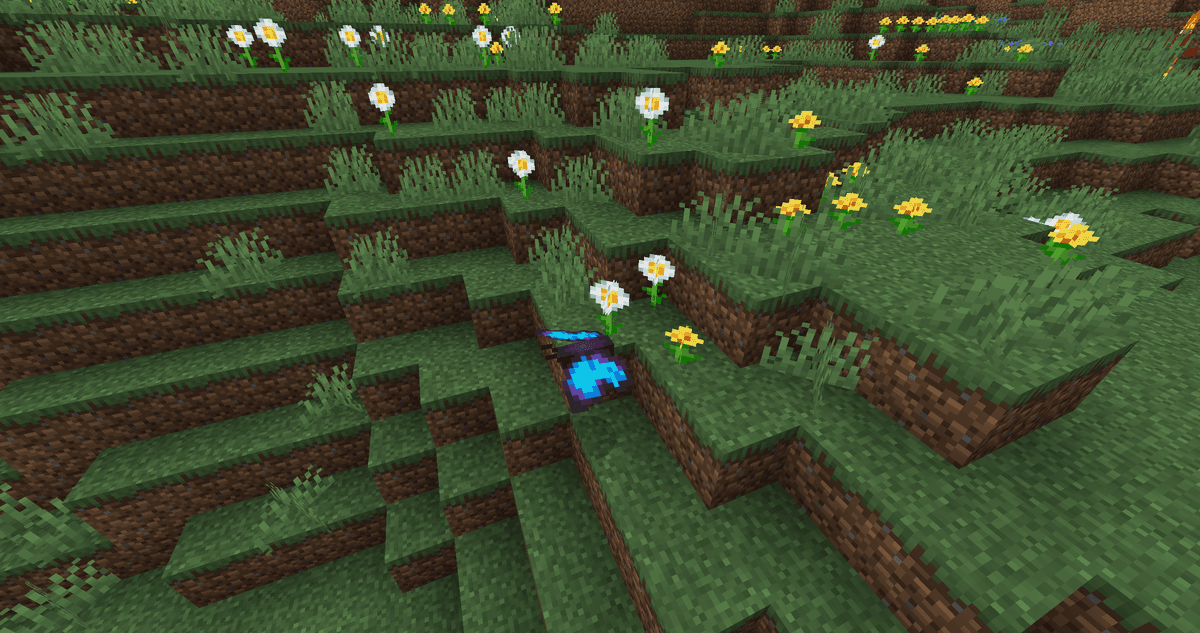
A butterfly flying between flowers in a flower forest
Firefly
Spawns at night in groups of 2–3. Flies erratically, turning its glow on and off. When day comes, if a firefly is not nametagged or secured (e.g., in a boat), it hides in the grass and despawns. Drops 0–1 Glowstone Dust (up to 4 with Looting).
Dragonfly
Spawn above swamps in three colors — red, green, and blue — moving more sharply than a bee. It belongs to the arthropods, so it takes extra damage from Bane of Arthropods. If you feed a dragonfly a chorus fruit, it will regurgitate a portion of Dragon's Breath — equivalent to one bottle.
Snail
Found in many biomes; when a player approaches, it freezes and hides in its shell. Drops 0–1 Snail Shell. A snail can be scooped up in a bucket, and once released, it no longer despawns; you can also rename it with the bucket on an anvil without a name tag. Snails can also be dyed, altering their texture. Snails are bred with beetroot and lay a block of eggs placed on a solid surface.
Turtle
Groups of 1–3 in swamps, jungles, deserts, and other biomes; appearance depends on the biome. If approached without sneaking and without its favorite food in hand, the turtle hides in its shell and stays still until left alone.
Aquatic Life
Catfish and Bass
Catfish is a solitary swamp fish, while bass swim in schools (up to five) in swamps and rivers. Both can be scooped into a bucket — creating a bucket of fish, and the released fish will no longer despawn. Out of water, they turn on their side and start suffocating after 10 seconds. Catfish drops Raw Catfish, bass drops Raw Bass; bass is also vulnerable to Impaling.
Duck
A swamp bird that lays duck eggs every 5–10 minutes and follows a player holding seeds. In the water, a duck tucks its legs and floats on the surface. Drops a feather and Raw Duck.
Birds
Birds are tamable passive mobs that spawn in groups of 1–4 on grass, leaves, logs, or in the air. The variant depends on the biome: cardinals — forests, savannas, swamps, deserts; canaries — hills and mountains; robins — forests, mountains, plains; blue jays — taigas, snowy biomes, ice spikes; sparrows — plains and cherry groves. Without seeds in hand, the bird flies away; feeding tames it, and it will then stay near the player.
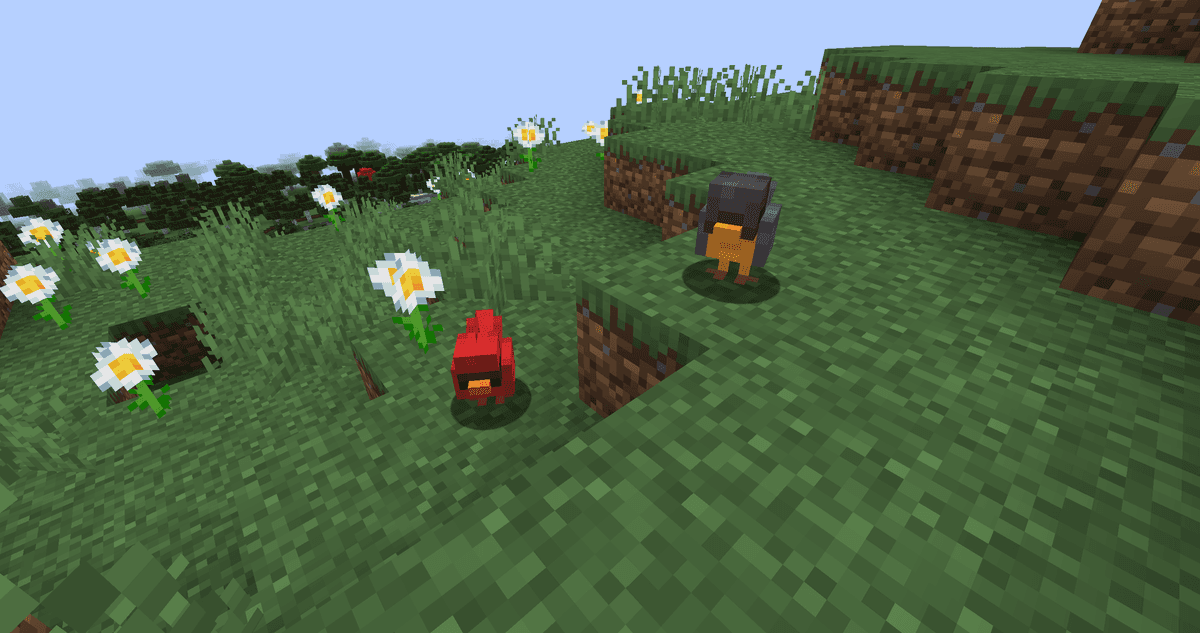
Tamed birds near the player
Savanna Animals
The mod dedicates a separate group of mobs to the savanna.
Lion spawns in a group of 3–5, which usually includes a cub. A maneless female becomes the leader; if she dies, the pride appoints a new one. At night, lions hunt as a group — sneaking up and then lunging. Lions can be bred.
Zebra behaves like a horse but flees from the player and moves slightly faster in water. Tamed and bred like a horse, just harder — you have to catch up to it.
Boar lives in savannas and forests, drops porkchop, and unlike a pig, cannot be saddled. Avoids the player, but if struck — fights until the offender dies or until it loses half its health, after which it flees. When struck by lightning, a boar turns into a Zoglin. Boars are bred with carrots, potatoes, or beetroot.
Giraffe is peaceful. If fed an apple or golden apple, it lets you ride it for 30 seconds; while riding, the map generation range increases by 1.5 times, making it great for quickly exploring the area. Giraffes are bred with a hay bale — but not while riding.
Elephant walks the savanna in a group of 2–3 (one might be a calf) and flees from bees. It ignores the player unless you attack the calf. Elephants cannot be bred — calves only come from natural spawns.
Hippo stays near water in groups of 3–4. Attacks boats and players entering the water; on land, it is mostly harmless until provoked. Hippos are bred with a melon block and only in the water.
Rhino is calm until you touch it or its calf. When agitated, it scrapes its hoof, charges in a straight line, and knocks the target upward like an iron golem; the hit can be blocked with a shield, which stuns the rhino. During the charge, it breaks fragile blocks (grass, flowers, crops) if mobGriefing is enabled. Drops 1–2 Leather and can be bred.
Vulture spawns in savannas, badlands, and deserts; a scavenger that waits near husks for rotten flesh. Drops 1–2 feathers.
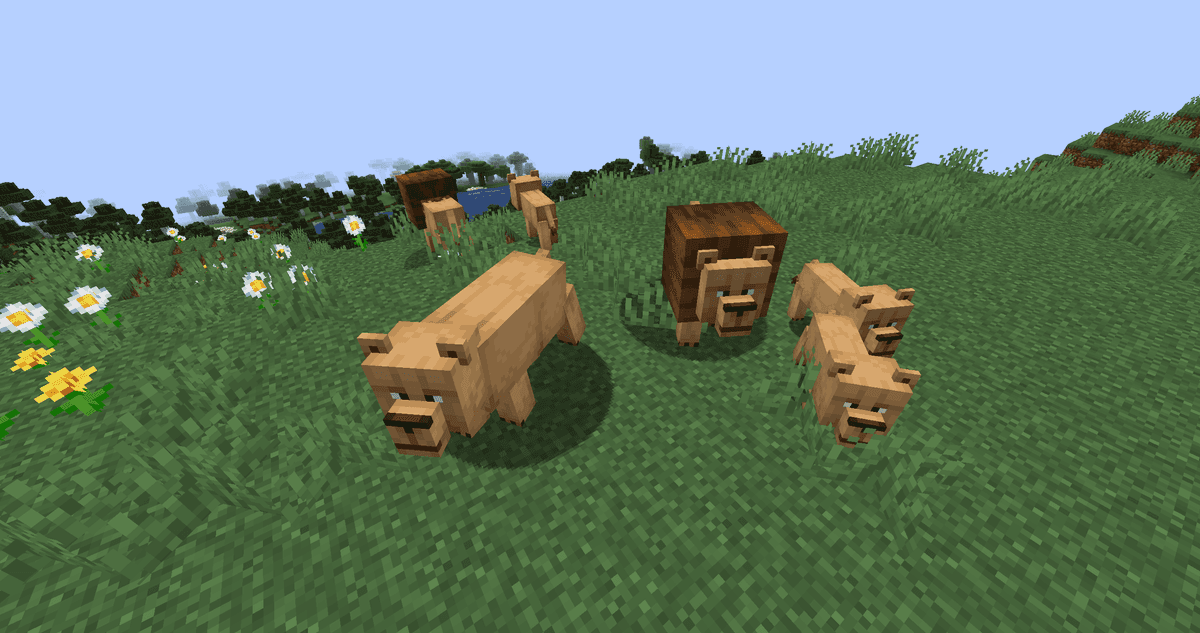
A pride of lions
Taming and Breeding
Player interaction varies by species. The main details are summarized in the table:
Animal | Taming | Breeding |
Bird | feeding seeds | — |
Zebra | like a horse | like a horse |
Giraffe | apple / golden apple (for riding) | hay bale |
Deer | — | apple |
Boar | — | carrot / potato / beetroot |
Hippo | — | melon block (in water) |
Snail | bucket + name | beetroot |
Elephant | — | cannot be bred |
Bears, lions, rhinos, alligators, and ducks can also be bred; the elephant is the only one you cannot multiply.
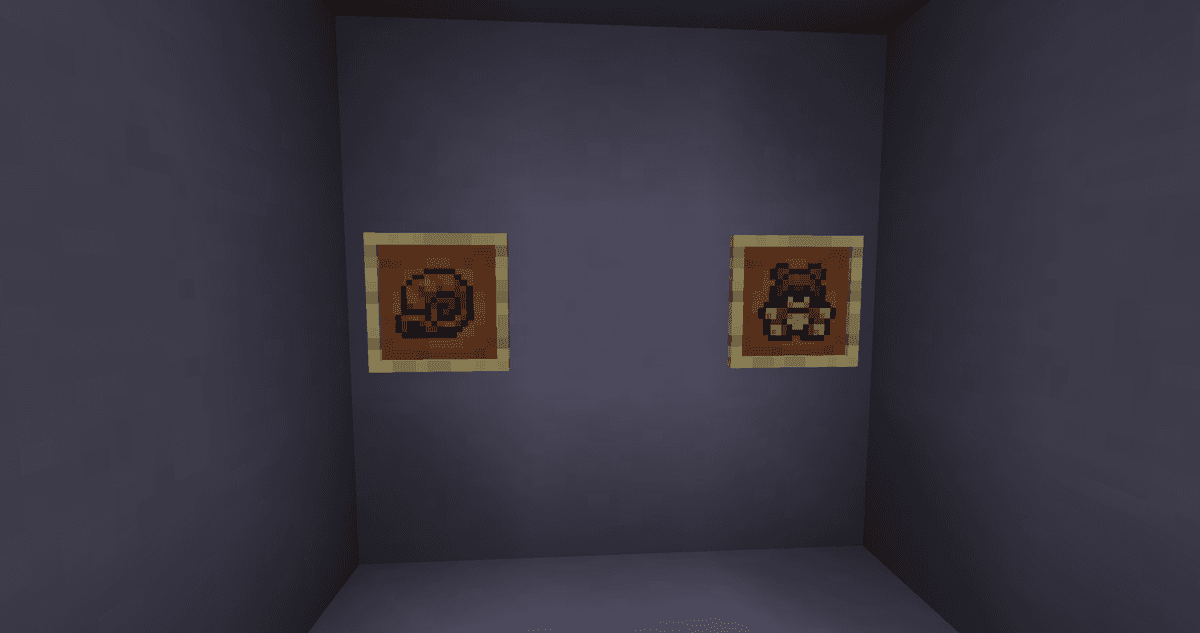
A Teddy Bear and a Snail Shell
Conclusion
Naturalist makes Minecraft's fauna feel alive through behavior — food chains, a daily sleep cycle, taming, and breeding. Unlike purely decorative mob packs, the animals here interact with each other and their surroundings rather than just wandering around. It suits survival and exploration playthroughs where the atmosphere of an inhabited world is valued; for purely technical or PvP modpacks, it adds almost nothing.
Installation
A typical installation takes about 5 minutes. The flow is the same; only the loader and the matching build differ.
- 1Install a mod loader (Forge, Fabric or NeoForge) that matches your Minecraft version.
- 2Download the mod file (.jar) built for that same version.
- 3Place the .jar into your .minecraft/mods folder.
- 4Launch Minecraft with the modded profile and check the mod loads in-game.
 Installing Mods in Minecraft: A Guide for Forge, FabricLearn how to install mods in Minecraft with this step-by-step guide for Forge and Fabric. Improve your game with new features, tools, and mechanics!Open the install guide