Polytone: The Ultimate Engine for Resource Packs in Minecraft
Dependencies: Loader: Fabric, Forge, NeoForge Minecraft version: 1.18.2 – 1.21.11+ Required dependencies: None (however, it may require…
Dependencies: Loader: Fabric, Forge, NeoForge Minecraft version: 1.18.2 – 1.21.11+ Required dependencies: None (however, it may require basic API libraries depending on the loader, for example Fabric API) For many years
Dependencies:
Loader: Fabric, Forge, NeoForge
Minecraft version: 1.18.2 – 1.21.11+
Required dependencies: None (however, it may require basic API libraries depending on the loader, for example Fabric API)
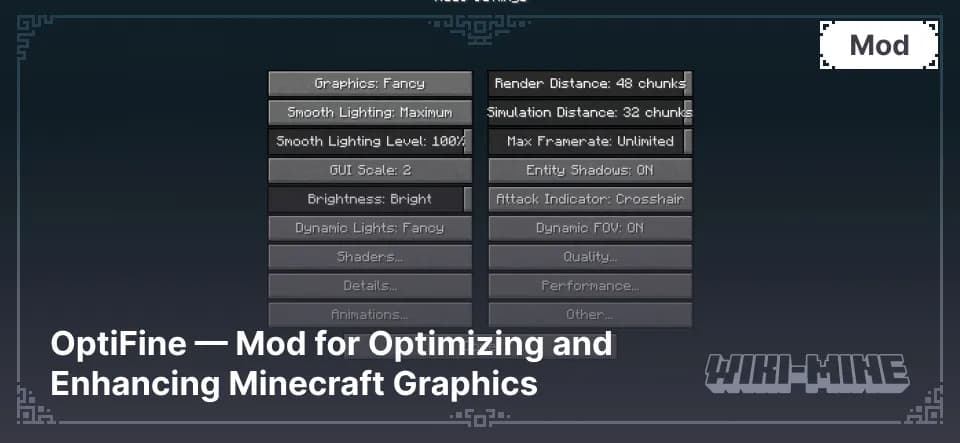
For many years, the ecosystem of Minecraft's visual component was monopolized by a single giant — OptiFine. Resource pack creators massively used its color.properties format to change biome colors, lighting, and the sky. However, with the emergence of modern, far more efficient optimizers (such as Sodium on Fabric or Embeddium on Forge/NeoForge), the use of OptiFine's closed source code became the cause of widespread conflicts and crashes.
In response to this crisis, developer MehVahdJukaar (known for the mods Supplementaries and Moonlight Lib) created Polytone. It is a powerful, ultra-modern, and fully open-source client-side modification whose main goal is to give resource pack creators unprecedented control over the game's visuals without installing outdated optimizers.
Fundamental Rework of the Visual Engine
Minecraft's vanilla engine has hardcoded color parameters for most objects. Polytone completely removes these limitations by integrating directly into the game's rendering pipeline:
Lightmaps & Colormaps: The addon allows you to dynamically change the color of any element in the game. This applies not only to leaves or grass, but also to water in specific biomes, fluid tints, the sky, fog, clouds, and even particles. Moreover, the mod allows lightmaps to be rewritten, making it possible to create gloomy worlds without light sources or worlds with unique neon lighting from torches.
Dynamic and Biome Textures: Developers can assign different textures to the same block depending on the biome or the time of day in the game. For example, stone in the desert can automatically take on a sandy tint, and windows in houses can "light up" as the in-game night falls.
Post-Processing System (Post-Processing Shaders): Support has been introduced for custom post-processing shaders to create unique visual effects (retro camera, blur, space distortion) without using full-fledged heavy shader packs.
Innovative Audio Engine
The modification goes far beyond ordinary graphics editing, offering deep integration with the game's audio system. In vanilla Minecraft, adding new sounds requires the use of complex datapacks. Polytone allows you to:
Register entirely new sound events (Sound Events) exclusively on the client side.
Change the sounds of footsteps (step sounds), breaking, or placing specific blocks. You can create a resource pack that makes footsteps on metal sound more resonant without touching the game's own internal code.
Deep Customization of the Interface (GUI) and Items
Working with the graphical interface has always been a "weak spot" for resource pack developers. Polytone solves this problem using a flexible JSON architecture:
Inventory Manipulation: The mod allows you to physically move slots in the graphical interface, change their size, or hide certain menu elements.
Creative Tabs: The ability to create your own custom tabs in creative mode for sorting items from different resource packs without server-side modifications.
Tooltips & Models: Allows you to rework text tooltips, hide vanilla characteristics, change the rarity color (Rarity colors), and bind custom 3D models to tools or weapons depending on their wear.
Compatibility, Architecture, and Optimization
The most important technical aspect of Polytone is its perfect compatibility with modern optimization standards:
Multiloader Support: The mod has full-fledged versions for Fabric, Forge, and NeoForge.
Backward Compatibility with OptiFine: The mod has a built-in system for recognizing the old color.properties format. If you load an old resource pack made for OptiFine, Polytone can correctly read its files and render the colors without errors.
Synergy with Sodium / Embeddium: Unlike old optimizers, Polytone does not overlap with Sodium's chunk rendering algorithms. They work in tandem: Sodium ensures maximum frame rate (FPS), while Polytone takes on the processing of the resource pack's complex visual effects.
Conclusion
Polytone is a true technical breakthrough that finally closes the era of dependence on OptiFine's closed source code. It is the ultimate, lightweight, and powerful tool that transforms ordinary resource packs into full-fledged content add-ons. For regular players, this mod is a mandatory client base in modern optimized modpacks, and for artists, it is an indispensable API framework that allows the most complex ideas to be realized without writing a single line of Java code.
Installation
A typical installation takes about 5 minutes. The flow is the same; only the loader and the matching build differ.
 Installing Mods in Minecraft: A Guide for Forge, FabricLearn how to install mods in Minecraft with this step-by-step guide for Forge and Fabric. Improve your game with new features, tools, and mechanics!Open the install guide